As one of the leading garment manufacturing hubs in Southeast Asia, Indonesia is home to more than 505,000 textile businesses.
Given that scale, finding a reliable clothing manufacturer isn’t straight forward; especially for fashion startups dealing with limited experience and tight budgets.
From requesting samples to managing bulk production, every decision carries real consequences.
One wrong move can cost you time, money, and momentum.
This article walks you through how to find a reliable garment factory in Indonesia, so you can make smarter decisions from the beginning.
Why Indonesia?
If you’re weighing Indonesia against other sourcing destinations, here’s what makes it worth a closer look.
Indonesia’s textile industry recorded $13.8 billion in export value in 2023, employs roughly 3.86 million workers, and has over 5,000 registered large-scale factories.
Those numbers aren’t the largest globally (China and Pakistan both operate at a bigger scale) but Indonesia competes on different terms entirely.
Most Indonesian manufacturers lean toward ethical production practices, and their minimum order quantities tend to be far more accessible.
Bali-based factories, for example, typically accept orders of 50 to 500 pieces; a sharp contrast to the 1,000-piece minimums that are standard across most Chinese factories.
Production lead times generally fall between 4 and 12 weeks, depending on order complexity and volume.
For a startup still finding its footing, that flexibility matters.
Step 1: Know which clothing each region makes.
Indonesia’s manufacturing landscape offers specializations over time, and knowing this upfront saves you a lot of misdirected outreach.
Factories across Java tend to focus on large-scale commercial production: think tactical gear, uniforms, and workwear.
Bali, on the other hand, has carved out a reputation for boutique-quality garments, artisan, and startup-friendly minimum orders.
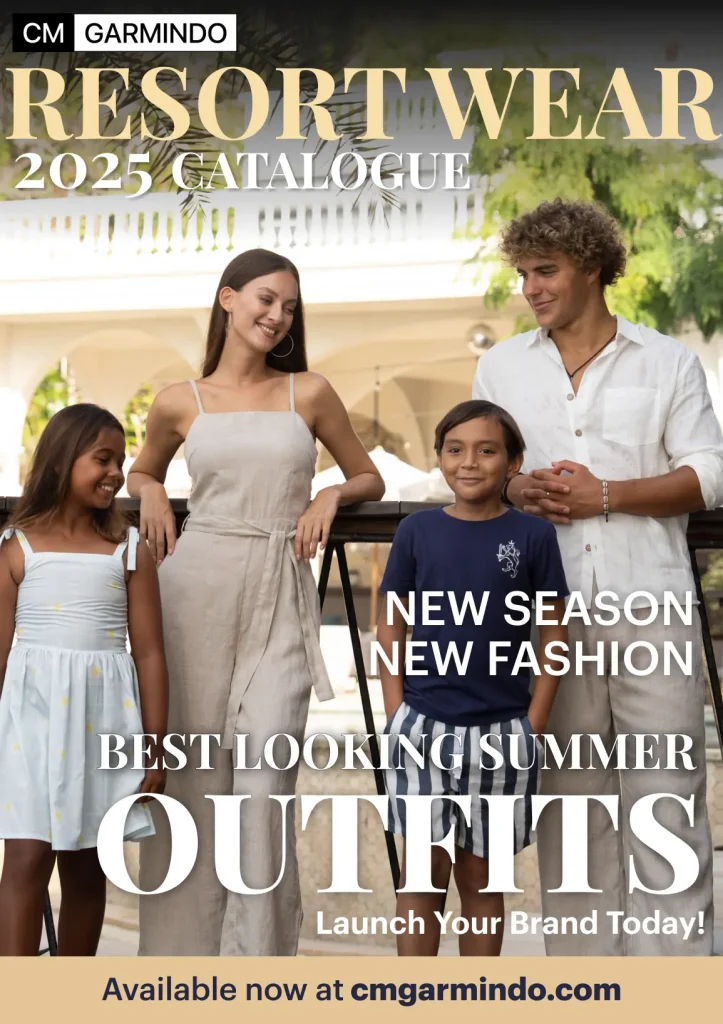
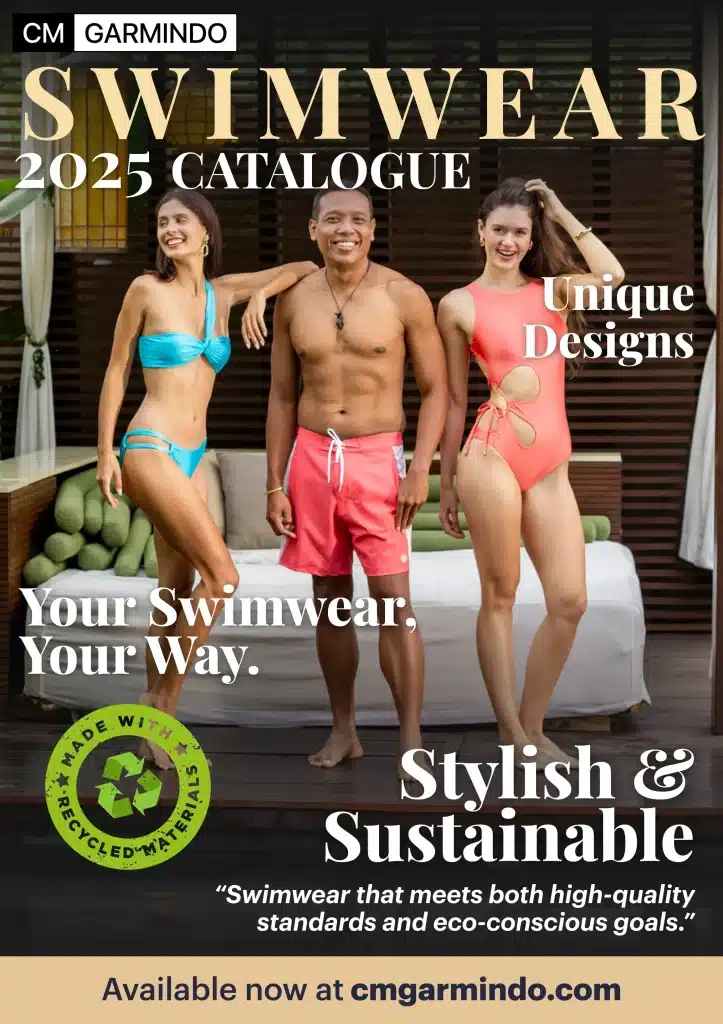
Bali manufacturers are particularly strong in premium, detail-oriented categories like activewear, babywear, resort wear and swimwear, and some work with sustainably certified fabrics as a matter of course.
Start your search in the region that aligns with what you’re making.
Step 2: Vet manufacturers before you commit.
Once you’ve got a shortlist of potential manufacturers, don’t skip the due diligence.
Ask each one the following questions directly and pay close attention to how they respond:
Are they legally registered?
You can verify this through OSS (Online Single Submission) and AHU (Indonesia’s business registry) records. A legitimate manufacturer won’t hesitate to provide their company registration number.
What is their MOQ per style per variation?
Standard minimums typically run between 500 and 1,000 pieces per style.
Smaller workshops may accept 100 (or even less) to 300 units for specialty items, though you’ll pay a higher unit cost for the lower volume.
What is their typical lead time?
In Indonesia, production lead times generally range from 4 to 12 weeks depending on order size, complexity, and fabric availability.
If a manufacturer can’t give you a straight answer here, that’s worth noting.
Do they offer full-package or CMT only?
- Full-package means they handle everything; design, pattern making, fabrics, cutting, sewing, finishing, and B2B shipping.
- CMT (cut, make, trim) means you’re handling the sourcing side yourself and the factory handles everything else to make your clothing.
- Neither is inherently better, but knowing this upfront helps you plan your workflow and costs accordingly.
What is their actual production capacity?
- If your brand is growing quickly, this question matters more than most people realize. Switching manufacturers mid-growth is expensive and risky where you can lose time, waste money on making new samples, which can also introduce quality inconsistencies at the worst possible moment.
- Ask plainly: how much can they scale with you if your volumes grow?
Step 3: Request a sample before anything else.
One of the most common mistakes new clothing startups make is rushing straight into bulk production without ever holding a finished product in their hands.
Granted; this mostly happens with print-on-demand, ready-to-wear, or white label manufacturing.
But there’s always an understandable impulse to move faster, but this shortcut can be very costly to undo.
Ordering a sample lets you evaluate everything that actually matters like how the design translates into a physical garment, seam quality, fabric hand feel, and how it holds up through basic durability testing.
Many Indonesian manufacturers make sampling easy, offering samples directly through their e-commerce channels.
Some will even waive the sample cost entirely if a bulk order follows. Our factory does.
Either way, it’s a small investment that protects a much larger one.
Step 4: Watch for red flags
Choosing a reliable manufacturer is one of the most important decisions you’ll make as a clothing brand.
Take it seriously.
Be wary of manufacturers who give vague answers about MOQs or fabrics or services.
Be especially cautious if they push back on your sampling request or try to pressure you into committing to bulk production before you’ve seen a single finished piece.
That kind of pressure almost never comes from a place of confidence; it usually signals they’re hiding something about their capabilities or quality standards.
You’re trusting them with a substantial portion of your budget. Ignoring these warning signs and proceeding anyway can lead to significant financial loss.
Make sure that trust is earned.
Step 5: Build the relationship deliberately.
Once you’ve found a manufacturer you trust, treat that relationship like the asset it is.
A good factory partner is genuinely hard to come by.
The value of that partnership will evolve over time; they learn your standards, you learn how to communicate with them, and production runs get smoother with each order.
Don’t treat them as interchangeable.
Communicate clearly, pay on time, and give them as much advance notice as possible when new orders are coming.
The brands that consistently get great output from their manufacturers are usually the ones that show up as good partners themselves.
Conclusion
Finding the right garment manufacturer in Indonesia takes patience, but the process is straightforward if you approach it systematically.
Know your region, ask the right questions, validate quality through sampling, and trust your instincts when something feels off.
Indonesia offers genuine advantages for startups with lower MOQs, ethical production, and a strong specialization in premium garments. But those advantages only work in your favour when you’ve done the groundwork to find a partner who’s actually a good fit.
Take the time up front.
It’s far easier than untangling a bad manufacturing relationship once you’re already in one.
Source :
https://mapresourcesindonesia.com/investment-prospects-in-indonesias-textile-and-garment-industry/ https://hrone.com/blog/indonesian-textiles-and-garments-innovation-and-china-expansion-guide/