
Imagine this: you have carefully prepared your clothing designs, the sampling process went smoothly, and everything looks ready. Then you move to bulk production with a large quantity.
At this stage, things can quickly become unpredictable.
With the current market conditions, demand can shift rapidly.
Trends change faster than ever, and what seems like a strong product today might struggle to sell tomorrow.
For many small fashion businesses, committing to large production quantities can feel like a gamble; one that could easily sink the business if the products fail to sell.
This is where on-demand clothing manufacturing becomes an attractive solution.
In this article, we summarise several key benefits of running your clothing business by partnering with an on-demand clothing manufacturer.
-
Reduce deadstock.
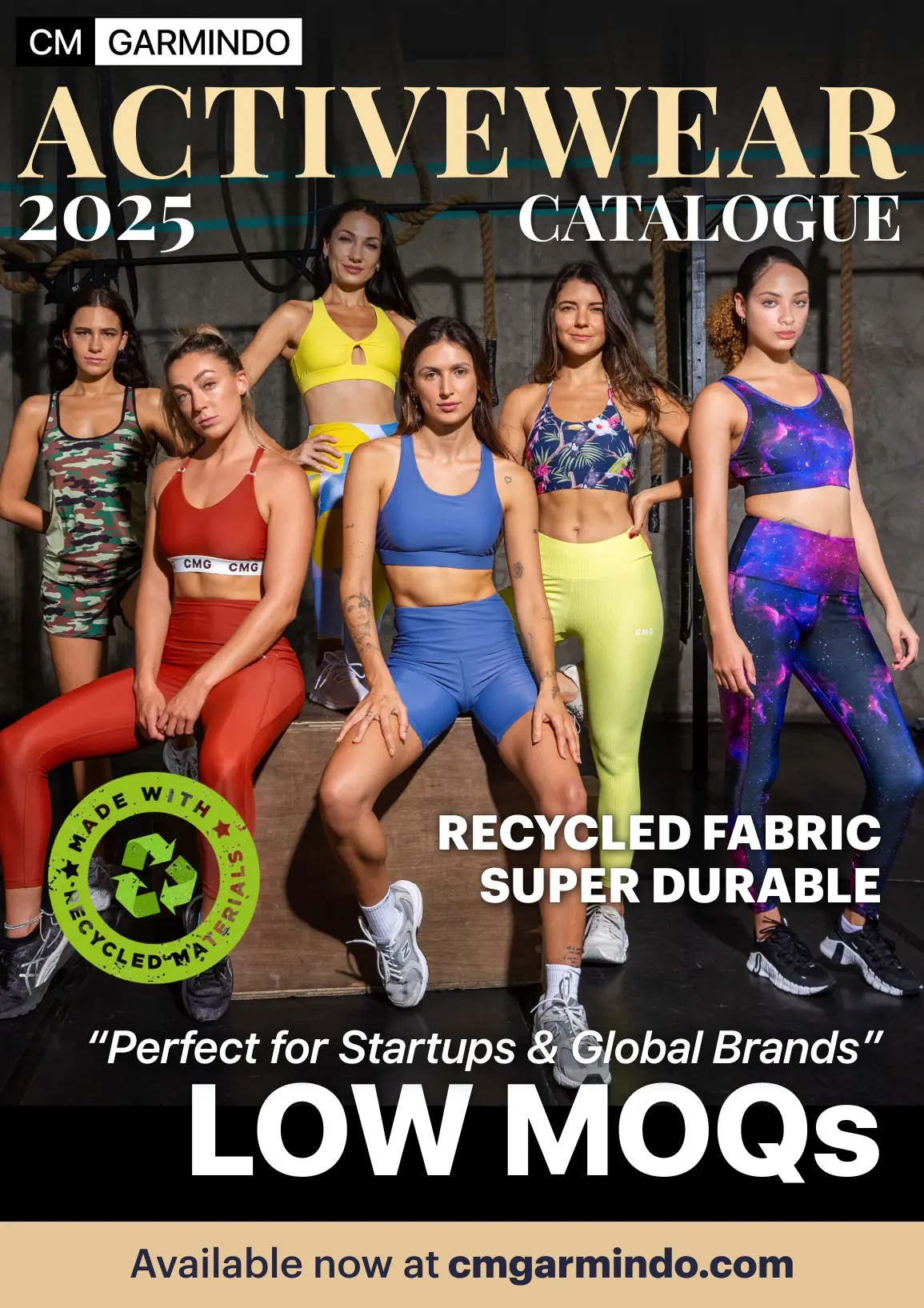
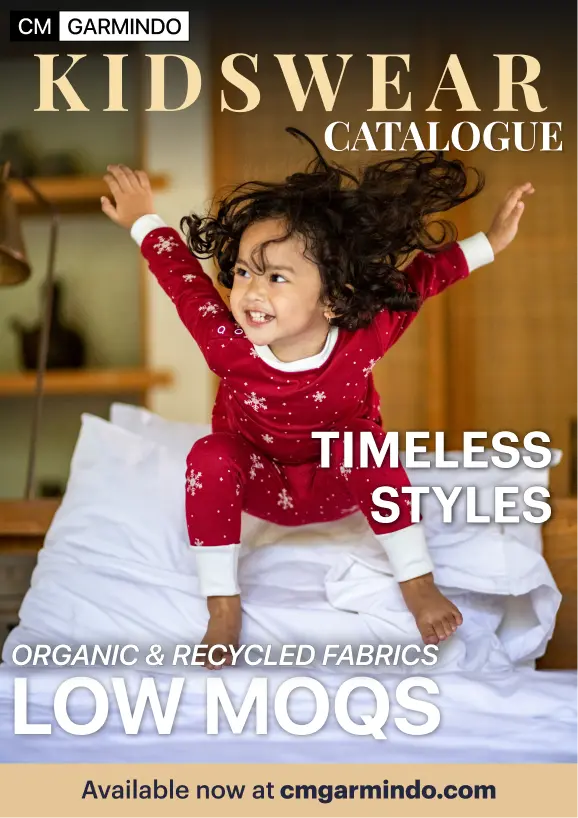
Many on-demand clothing manufacturers offer low, and even no, minimum order quantities (MOQs).
This provides a significant advantage, especially for start-ups or emerging brands that are still testing market demand.
With a lower MOQ, you can produce garments in smaller quantities.
This allows you to test how your products perform in the market without committing to large volumes upfront.
As a result, you reduce the risk of unsold inventory and avoid the costly problem of deadstock.
This approach enables brands to stay more agile and responsive to market conditions.
-
Shorter and more flexible production planning.
Timing is crucial in fashion.
If your next collection is ready but the traditional production timeline does not align with the buying cycle, it can delay your market entry.
On-demand clothing manufacturing offers a more flexible alternative.
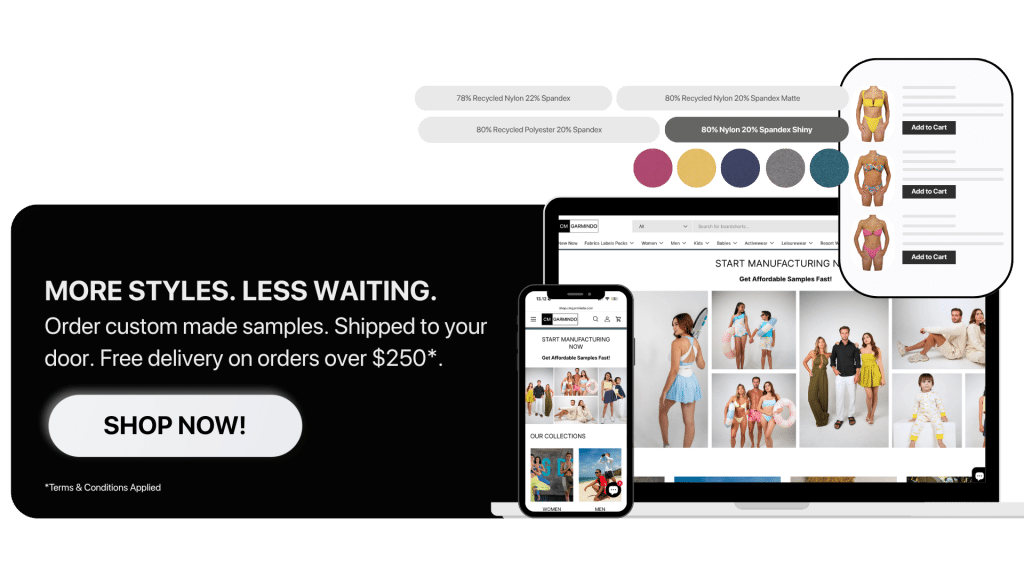
Some manufacturers provide white-label collections, allowing brands to customise from ready-made designs and put them into their own product line.
This eliminates the need for lengthy processes such as tech pack design, CAD pattern drafting, repeated prototyping, and design testing.
Instead, you can simply choose the style, fabrics, colours, add your own surface designs (embroidery/prints), and decide the quantity you wish to order.
This significantly speeds up the production process and helps brands respond quickly to market trends.
-
Shifting business focus to the most important things.
Many new fashion entrepreneurs believe that strong designs and good materials are the only factors needed to succeed.
In reality, a successful fashion brand requires much more than just a good product.
Marketing, branding, storytelling, and customer engagement all play crucial roles in driving sales.
By working with an on-demand clothing manufacturer, you can reduce the time spent on technical processes such as pattern development and repeated sampling.
This allows you, as a brand owner, to focus more on strategic areas such as marketing, brand positioning, and customer acquisition.
-
Stronger unique selling proposition.
One of the key reasons customers choose one brand over another is its unique selling proposition (USP); the distinctive value that sets it apart from competitors.
Partnering with the right on-demand clothing manufacturer can help you build that differentiation.
Many manufacturers today support brands with sustainable materials, ethical production standards, or Fair Trade practices.
These aspects can become part of your brand identity and strengthen your value proposition.
Importantly; be careful to avoid greenwashing.
Brands should work with manufacturers that can verify their sustainability claims and ethical standards, allowing you to communicate these values to customers with authenticity and credibility.
Conclusion
In today’s fast-changing fashion market, flexibility and risk management are essential for brand survival.
On-demand clothing manufacturing offers a practical solution by enabling brands to produce smaller quantities, reduce inventory risks, and shorten production cycles.
More importantly, it allows brand owners to shift their focus towards building stronger marketing strategies and brand identity.
For fashion entrepreneurs and growing brands, partnering with the right on-demand clothing manufacturer can transform production from a risky commitment into a strategic advantage that supports sustainable and scalable growth.