If we talk about Bali, the first things that usually come to mind are beaches, culture, and perhaps its incredible food.
But over time, Bali has transformed into an epicentre for the creative industry as well.
This transformation did not happen without reason. Bali’s strong cultural identity, natural beauty, and even the behaviour of the people around it have all influenced the creative output of products; one of them being garments.
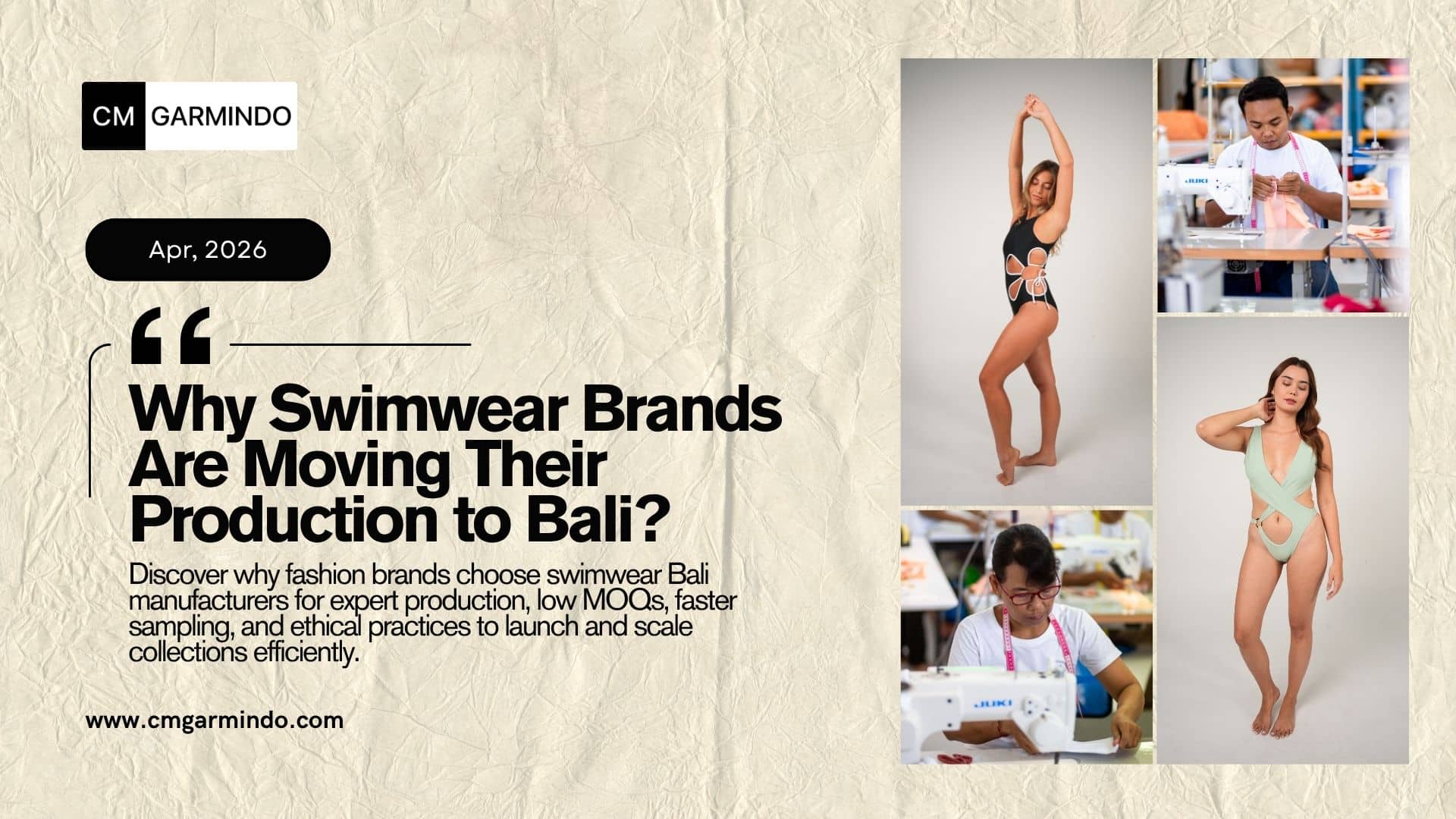
More fashion brands, from start-ups to boutique labels, are now choosing Bali as their production base.
In this article, we will explore why many brands (especially swimwear brands) are moving their production to Bali.
1. Expertise in Swimwear
Supported by its geography, being surrounded by beaches, clothing manufacturers in Bali have developed a strong specialisation in swimwear production.
From understanding design trends, selecting the right materials, to handling complex stitching techniques, Bali has become a highly suitable hub for swimwear manufacturing.
Additionally, the close proximity to ideal photoshoot locations for swimwear collections makes Bali even more attractive from a marketing perspective.
2. Low MOQ, High Flexibility
Compared to mass-produced swimwear typically sourced from China, manufacturers in Bali offer a different approach.
They focus more on boutique-quality production, with significantly lower minimum order quantities (MOQs).
This provides a major advantage for start-up brands, allowing them to avoid overspending and overstocking.
Brands can produce in smaller volumes to properly test the market before scaling their collections.
3. Faster Sampling
In more traditional manufacturing setups, sampling can take several days; especially when there is no white label system in place, requiring back-and-forth communication and designing from scratch.
Some swimwear manufacturers, like CM Garmindo, offer faster and more convenient sampling processes through e-commerce platforms.
With e-commerce-based sampling, brands can easily place orders online, customise samples more efficiently, and benefit from reliable shipping options.

4. Ethical Production
Garment production has long been associated with sustainability challenges.
At the same time, there is a growing demand for responsible manufacturing.
As a result, swimwear manufacturers are increasingly expected to adopt ethical production practices.
Manufacturers in Bali generally offer a more ethical approach to fashion production; supported by fair wages, safe working conditions, and strictly no child labour.
Some manufacturers are also certified by third-party organisations such as Intertek through programmes like SMETA, ensuring that their operations align with fair trade principles.
5. Highly Skilled Workforce
Indonesia has a unique garment production landscape.
T-shirt production, knitwear, and sportswear are generally concentrated in West Java, while batik and heritage textiles are typically produced in Central Java.
In contrast, swimwear production is highly specialised in Bali.
This regional specialisation has naturally led to the development of a highly skilled workforce in Bali with deep expertise in swimwear manufacturing.
Conclusion
Bali has evolved far beyond a travel destination; it is now a strategic production hub for modern fashion brands, particularly in swimwear.
With its specialised expertise, low MOQ and flexible production approach, faster sampling and strong commitment to ethical manufacturing, Bali offers a unique combination that is difficult to replicate elsewhere.
On top of that, its highly skilled workforce and natural alignment with swimwear culture make it an ideal environment for brands looking to create, test, and scale their collections efficiently.
For emerging and growing fashion brands, moving production to Bali is a smarter decision; one that helps you build a stronger brand image while creating a more responsible business.