Can you imagine having a large volume of garment stock sitting in your warehouse without first validating how your market responds to your collections?
Many fashion brands fail for one simple reason; they produce too much without clear evidence that their designs or brand concept will be well received by their target audience.
Other brands, meanwhile, rely entirely on on-demand manufacturing; playing it safe, yet often struggling to build a brand that truly stands out.
With today’s volatile market conditions, this creates real pressure to think strategically.
By combining on-demand clothing manufacturing with low MOQ production, emerging brands can unlock significant advantages.
What would happen if you only chose one manufacturing model? Low MOQ or On Demand Manufacturing
Both approaches offer distinct benefits for clothing businesses.
Low MOQ production is relatively budget-friendly, as it allows you to produce garments in smaller quantities while maintaining quality control and building a strong brand identity.
However, it does require upfront investment, and you will still need to hold stock.
On the other hand, on-demand manufacturing operates quite differently. It eliminates inventory risk entirely, as products are only created once a customer places an order; meaning no need to store items in a warehouse while waiting for them to sell.
This approach is efficient, flexible, and ideal for testing brand concepts and ideas.
That said, it also comes with limitations, particularly in terms of material options and customisation.
Strategically speaking, combining these two methods allows you to maximise their strengths.
The Smarter Approach: test now, scale later
The most successful emerging brands today follow a simple yet strategic approach:
-
Start with On-Demand for Sampling & Validation
Instead of guessing what will sell, brands use on-demand production to develop samples and test the market. This could include:
- Creating initial prototypes
- Running small test launches
- Validating designs through real customer demand
This phase is fast, flexible, and low-risk, as there is no need to hold large volumes of stock in your warehouse.
-
Move to Low MOQ for Bulk Production
Once a product demonstrates clear demand, the next step is to scale through low MOQ production. This enables brands to:
- Improve cost efficiency
- Maintain consistent quality
- Deliver faster to customers
- Build a stronger and more reliable brand presence
Why this hybrid model works
As a brand, thinking strategically is essential. Here are some of the key benefits of adopting this hybrid approach:
- Minimised risk, as you only scale what has already proven successful
- Improved cash flow, with no unnecessary inventory investment
- Faster decision-making, driven by real data rather than guesswork
- Higher profit margins, by focusing on products that truly perform
In 2026, successful fashion brands are defined by how they move, not by how much they produce.
Start small. Test quickly. Scale what works.
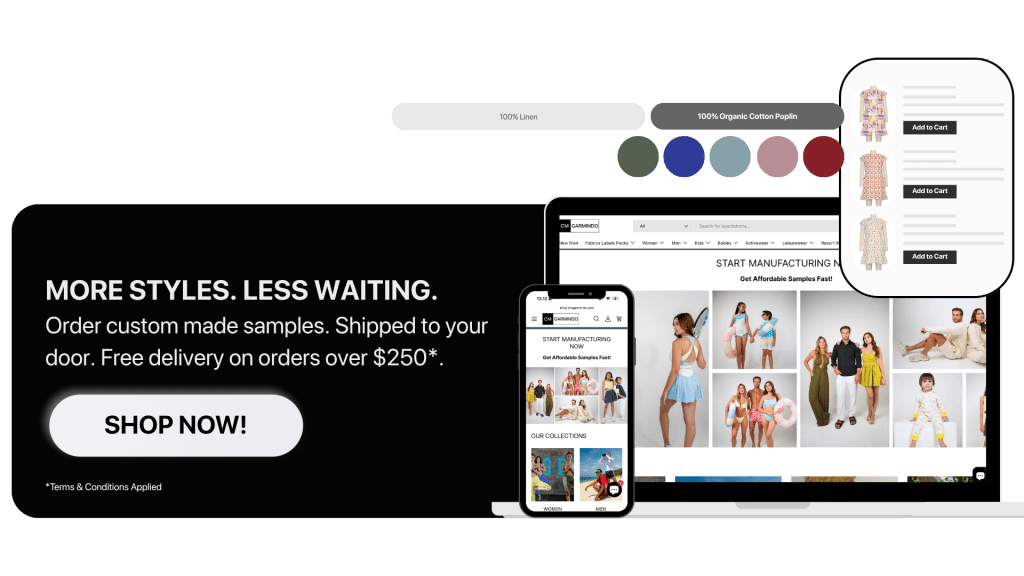
If you are ready to take the next step, you can explore our own curated styles that you can fully customise! Simply visit our shop and start selecting styles, fabrics, colours, prints, and more.
Begin your production journey here: Visit our shop and start building your next collection today.