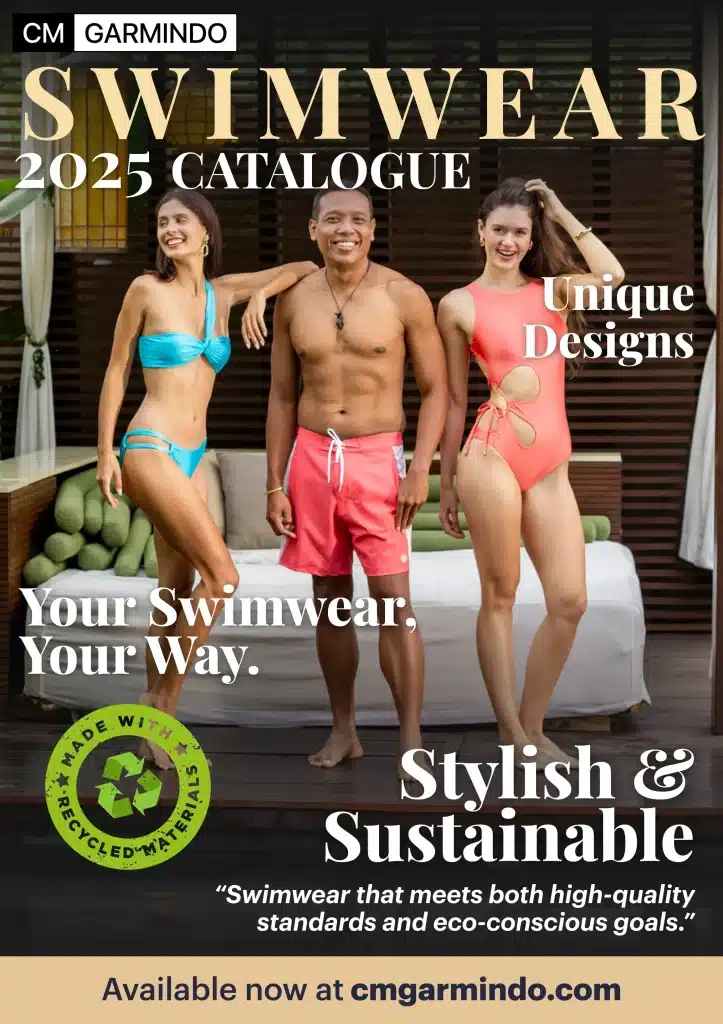

Fabric selection is one of the most important decisions in swimwear production. It determines how each piece performs, feels, and lasts over time.
The right fabric ensures fit, durability, and comfort even after repeated exposure to chlorine, saltwater, and sunlight.
As global demand for sustainability increases, more swimwear brands are moving towards recycled materials.
However, many end-consumers still choose swimwear based on design rather than function.
Manufacturers like us play a key role in guiding brands like yours to make informed, long-term fabric decisions that align with both performance and environmental goals.
Why Fabric Quality Matters
Swimwear must withstand heat, friction, and exposure to harsh elements. Inferior materials often lose elasticity, fade quickly, and reduce the lifespan of the garment.
Choosing the right fabric can improves:
- Durability – withstands repeated use and exposure to chlorine or saltwater
- Comfort and fit – moves naturally with the body and retains shape
- Colour fastness – prevents fading and maintains aesthetic value
- Sustainability – supports responsible sourcing and long-term use
At CM Garmindo, every swim garment starts with a detailed fabric assessment, ensuring each brand receives the best balance between function, aesthetics, and responsible material sourcing.
Key Qualities of a Good Swimwear Fabric
High-quality swimwear fabrics should have:
- Stretch and recovery: Strong elasticity that maintains its original form
- Shape retention: Resistance to sagging or deformation over time
- Colour fastness: Protection from fading caused by sunlight or chlorine
- Quick-dry ability: Lightweight and fast-drying after contact with water
- Durability: Long-lasting structure and fibre strength
- Sustainability: Use of recycled or regenerated materials with verifiable supply chains
With these considerations, we’re ready to sum up some of the best swimwear fabrics for you.
1. Recycled Polyester + Spandex
Recycled polyester remains one of the most dependable materials for swimwear. Produced from post-consumer plastics, it combines durability with a strong sustainability message. When blended with elastane, the fabric offers excellent stretch, recovery, and resistance to chlorine.
Why it works: cost-effective, durable, easy to source, and available in certified recycled forms.
Best for: commercial swimwear and active collections that prioritise performance.
2. Regenerated Nylon (Econyl®) + Spandex
Regenerated nylon, such as Econyl®, is made from recycled waste materials like fishing nets and industrial nylon.
It delivers a smooth, premium, hand-feel and retains elasticity even after long-term use.
Why it works: strong sustainability story, luxurious texture, and consistent performance.
Best for: premium and resort swimwear lines seeking to combine quality with responsibility.
3. Technical Performance Fabrics
Athletic and high-performance swimwear require materials that can handle movement, sun exposure, and frequent washing.
Advanced technical blends are designed for extra chlorine resistance and UV protection, ensuring elasticity and compression are maintained.
Why it works: engineered for endurance and flexibility.
Best for: competitive, training, or multi-purpose swimwear lines.
4. Emerging Sustainable Alternatives
Innovation in textile development is introducing plant-based and biodegradable synthetics. These materials are still in early adoption but promise lower environmental impact.
The helicopter view below makes it easier to define what kind of fabric you can use based on the swimwears’ functionalities to strengthen your brand positioning :
| Product Focus Category | Recommended Fabric | Key Advantages |
| Eco-Luxury | Regenerated nylon + Spandex | Soft hand feel, premium look, and strong sustainability story |
| Performance Swimwear | Recycled polyester + Spandex | High chlorine resistance and durability |
| Everyday Sustainable Line | Recycled polyester + Spandex | Affordable, easy-care, and responsible |
| Innovation-Focused Brand | Plant-based synthetics | Future-forward concept and product differentiation. |
Conclusion
The best fabrics for swimwear are those that balance performance, durability, and responsibility.
As global expectations around sustainability rise, fabric selection is no longer only about aesthetics, it’s a business decision that shapes brand reputation and product longevity.
At CM Garmindo, we go beyond fabric selection. Our role is to help clothing startups and growing brands bring their vision to life by offering:
- Lower minimum order quantities (MOQs) to make production accessible.
- High-quality fabrics and stitching that meet international standards.
- End-to-end production support, from design sampling to final finishing.